
Last Updated: November 5, 2026
Quick Summary
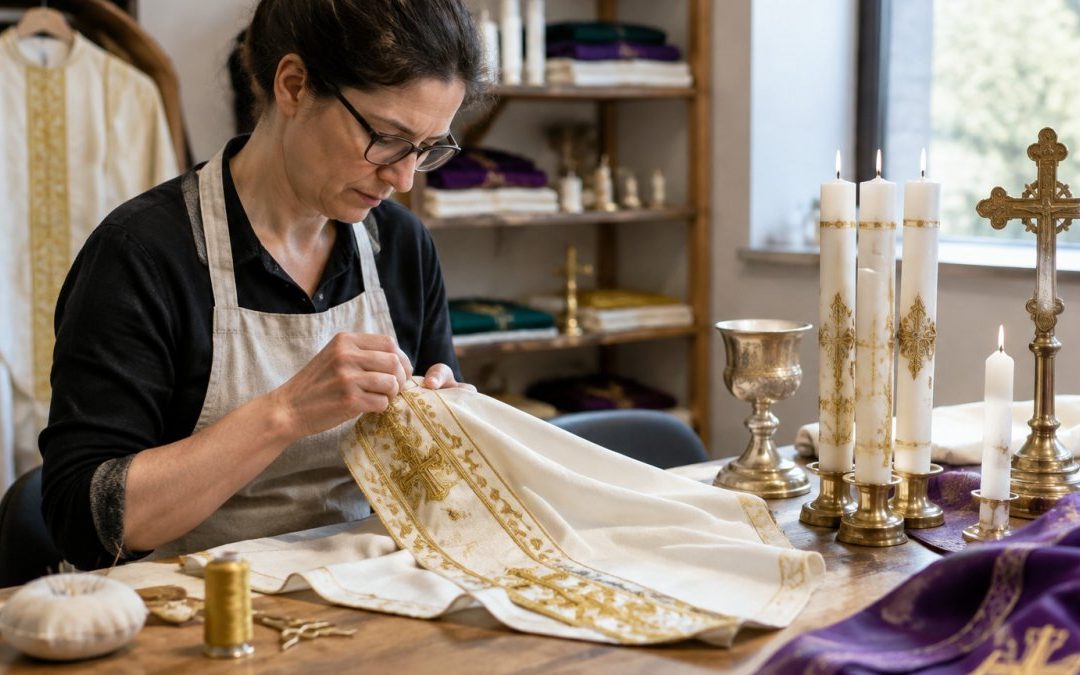
Handmade liturgical sanctuary goods, such as paraments, altar cloths, vestments and altar candles, are made by hand and can be chosen with attention to fabric, stitching and finish. Churches can check construction, ask about fiber and weight, and review completed installations before ordering.
- Handmade liturgical goods include paraments, altar cloths, vestments, altar candles and devotional items.
- Check whether seams are flat-felled or enclosed so raw edges cannot ravel.
- Turn a piece over, since the reverse side reveals stitch quality better than the front.
- Ask for the actual fiber composition and weight, not just a fiber label.
- Request a clear breakdown of total cost, production time and shipping before ordering.
Table of Contents
- What Handmade Liturgical Sanctuary Goods Include
- The Craftsmanship and Tradition Behind Handmade Liturgical Goods
- Choosing Custom Paraments and Custom Altar Cloths for Your Church
- Caring for Liturgical Textiles So They Last Through the Seasons
- Requesting a Quote and Planning Your Next Sanctuary Order
- Frequently Asked Questions
Church leaders who buy sanctuary goods often face a real choice between mass-produced items and pieces made by hand. Handmade liturgical sanctuary goods, from altar cloths to paraments to altar candles, are made by hand and can be chosen with attention to fabric, stitching and finish. Church Catalog is a family-owned and operated provider of candles, clergy vestments, and sanctuary essentials. Below, we explain what these items include, why the making matters, and how to order with confidence.
What Handmade Liturgical Sanctuary Goods Include
Handmade liturgical sanctuary goods cover the items used to dress and furnish a worship space. Most churches need a mix of textiles, candles and devotional pieces across the liturgical year.
Common categories include:
- Paraments: Fabric hangings for the altar, pulpit and lectern, changed with each season
- Altar cloths: Linen or fabric coverings for the altar table
- Vestments: Clergy garments worn during services
- Altar candles: Candles sized and finished for sanctuary use
- Devotional items: Pieces for personal prayer and home chapels
Each category serves a practical role. Browse the candle category to see the altar and sanctuary candles available. Paraments and altar cloths set the color of a season, while candles and vestments support the rhythm of worship.
The Craftsmanship and Tradition Behind Handmade Liturgical Goods
Handmade work can take longer, but “handmade” is not a single standard. Two makers can both call a parament handmade while using very different construction methods, fiber content and finishing. The practical question for a church buyer is not whether a piece is handmade but whether the making was done to a standard that will hold up in sanctuary use. The following checks can help separate durable handwork from decorative handwork.
Construction methods. Look at how the piece is put together, not just how it looks from the front. On paraments and altar cloths, ask whether seams are flat-felled or otherwise enclosed so raw edges cannot ravel, whether appliqué is stitched down rather than fused, and whether linings are attached separately so the face fabric can move without puckering. On vestments, ask about interlining and shoulder construction, because a garment that hangs well on a hanger can still pull at the yoke during a service.
Stitching and finish. Even, consistent stitch length and a clean reverse side are the clearest signals of handwork done with care. A hand-stitched hem should hold its line and lie flat after repeated pressing; a machine-stitched edge can be perfectly acceptable, but it should be straight, secure and finished so it will not fray. Turn a piece over. The back of the work tells you more than the front.
Fiber and material quality. Fiber content alone is not a quality grade. Ask for the actual composition and weight, whether the fabric has been pre-shrunk, and how the color is applied.
References and completed work. Ask to see examples of completed installations in worship spaces. Ask what a maker’s repair and re-finishing practice looks like over time.
A link to the long tradition of sacred art. Traditional techniques also keep design true to its purpose. Ask whether a maker works from established patterns or designs from scratch, and whether they can match an existing set.
Compare construction, not only quotes, before you order.
The difference is knowing how to verify construction and finish before you order.
Choosing Custom Paraments and Custom Altar Cloths for Your Church
Custom paraments and altar cloths let a church match its space, its colors and its seasons.

Start with three questions:
- What are the exact dimensions of your altar, pulpit and lectern?
- Which liturgical colors do you need, and for which seasons?
- Do you want a traditional or a contemporary design?
Pricing depends on quantity, fabric, dimensions and delivery timing, so request a quote from Church Catalog for current figures. For a deeper look at sourcing vestments affordably, see our guide. Emitte Candela custom paraments and altar cloths show the handmade work behind these pieces.
Total Cost, Lead Times and What to Ask Before Ordering
Before you order, ask for a clear breakdown of the total cost, production time, shipping and any fees.
A few questions help you plan:
- How long does production take from order to delivery?
- Is shipping included, or charged separately?
Plan ahead for seasonal changes. Plan ahead for seasonal deadlines such as Advent or Lent. Find out whether reliable delivery is possible before you commit to a timeline.
Caring for Liturgical Textiles So They Last Through the Seasons
Good care extends the life of your textiles. Store paraments folded flat, away from direct sunlight and damp air.
Follow these habits:
- Check the care label before washing or pressing
- Use a low heat setting when ironing linen or wool
- Rotate pieces so each one gets even wear
- Keep candles in a cool, dry place to prevent warping
Textiles used on the altar may face candle smoke and wax, so inspect them after each season.
The article lists habits that help textiles last through the seasons. They are summarised below.
| Habit | Why it matters |
|---|---|
| Check the care label | Before washing or pressing |
| Low heat for linen or wool | When ironing |
| Rotate pieces | So each gets even wear |
| Cool, dry storage for candles | Prevents warping |
| Store paraments folded flat | Away from sunlight and damp air |
| Inspect after each season | Candle smoke and wax can affect altar textiles |
Requesting a Quote and Planning Your Next Sanctuary Order
Plan your order early so each piece arrives before the season begins. Gather your measurements, your color needs and your delivery date, then request a quote.
If your church is tax-exempt, you can submit a Tax Exemption Request with your order. Church Catalog serves over 100,000 churches and ministries.
Reach out to Church Catalog for a quote and current pricing.
Frequently Asked Questions
What are liturgical sanctuary goods?
Liturgical sanctuary goods are the items used in worship and kept in the church’s sanctuary, including vestments, paraments, altar cloths, candles, and sacred vessels. Many congregations treat these pieces as part of the worship itself, so their material, color, and construction matter. Church Catalog offers candles, clergy vestments, and sanctuary essentials. For current availability and quotes, visit the Church Catalog website or request a quote directly.
Why do churches choose handmade liturgical goods?
Churches often choose handmade liturgical goods for craftsmanship, durability, and fit with a specific worship space. Handmade pieces can be designed around a congregation’s liturgical colors and traditions, and they frequently use natural fibers chosen for drape and longevity. Buyers should ask about construction methods, finishing details, and how the item will hold up across seasons of use before ordering.
How should churches care for handmade liturgical textiles?
Handmade liturgical textiles last longer with consistent, gentle care. Store vestments and paraments away from direct sunlight and humidity. Follow the care label, and check with the supplier before cleaning. Rotating pieces through the liturgical seasons also reduces wear on any single item.
What should a church ask before ordering custom sanctuary goods?
Before ordering custom sanctuary goods, ask about total cost and lead times. Pricing depends on quantity, design, and delivery timing, so request a quote from Church Catalog for current figures instead of relying on estimates.
