
Last Updated: October 30, 2026
Quick Summary
To source vestments on budget, set a clothing budget before you shop, buy off-season and in sets, and split your approach: buy the most-used colors new and source rarely used colors through parish transfers or resale. Group purchasing with neighboring parishes and asking your diocesan office about vestment libraries can save more than any sale.
- Buying every liturgical color at once is the most common budget mistake.
- Accept a synthetic blend on rarely used colors and insist on natural fibers for white and green sets.
- Plan liturgical supply budgets as a rolling three-year cycle, not a single annual line.
- Store vestments flat or on wide padded hangers, never on wire, and out of direct sun.
- Ask your diocesan office about vestment libraries or parish swap networks before buying new.
Table of Contents
- Step 1: Set a Clothing Budget Before You Shop
- Step 2: Check Fiber Content and Fabric Durability
- Step 3: Find Affordable Catholic Vestments Without Cutting Quality
- Step 4: Build a Church Budget Planning for Liturgical Supplies Framework
- Step 5: Apply Liturgical Vestment Care Tips That Extend Garment Life
- Step 6: Weigh New, Second-Hand, and Resale Vestments
- Frequently Asked Questions
Step 1: Set a Clothing Budget Before You Shop
Learning how to source vestments on budget starts with one number on paper, not one browser tab open. Set the total first. Then divide it.
A realistic vestment line item covers more than the garment. It includes:
- The vestment itself, in the liturgical colors you actually use
- Alterations or tailoring after delivery
- Cleaning and storage supplies
What a Realistic Vestment Line Item Looks Like
Many churches find it helps to split the budget by color set and by wear frequency. A white set used every Sunday deserves more money than a red set used a few times a year.
Watch out: buying every color at once is the most common budget mistake. It spreads funds thin and leaves you with several cheap sets instead of two good ones.
Step 2: Check Fiber Content and Fabric Durability
Fiber content is a useful clue to how long a vestment will last, and it is worth checking before the price tag. Vestments are not ordinary garments: they are worn over other layers, cleaned on a schedule tied to the liturgical calendar, and expected to hold shape and color for years.
What the Label Tells You
Most vestment outer shells fall into three families:
- Wool and wool blends. Merino and quality wool blends drape well, resist wrinkles, and hold dye through repeated cleaning. They cost more up front and require careful cleaning.
- Polyester and synthetic blends. Lower cost, easy to clean, and colorfast. The trade-off is pilling and a stiffer hand over time. Many budget-friendly chasubles and stoles use a polyester blend, and that is not automatically a bad buy, it is a different lifespan.
- Cotton and linen blends. Breathable and comfortable for albs and server robes, but they wrinkle and can shrink. Check for pre-shrunk labeling.
A common pattern among experienced buyers is to accept a synthetic blend on rarely used colors (rose, black) and insist on a natural-fiber blend for the white and green sets used most often. That single rule captures most of the value.
Durability Checks You Can Do in Person
Photos hide defects. When you can handle the garment, run these checks:
- Scrunch test. Squeeze a corner of the fabric and release. Good fabric springs back; poor fabric stays creased.
- Seam check. Look at the hem, shoulder, and neckline. Tight, even stitching with no loose threads signals a garment that will survive cleaning cycles.
- Trim attachment. Orphrey bands and trim should be sewn down, not glued. Glued trim lifts after a few cleanings.
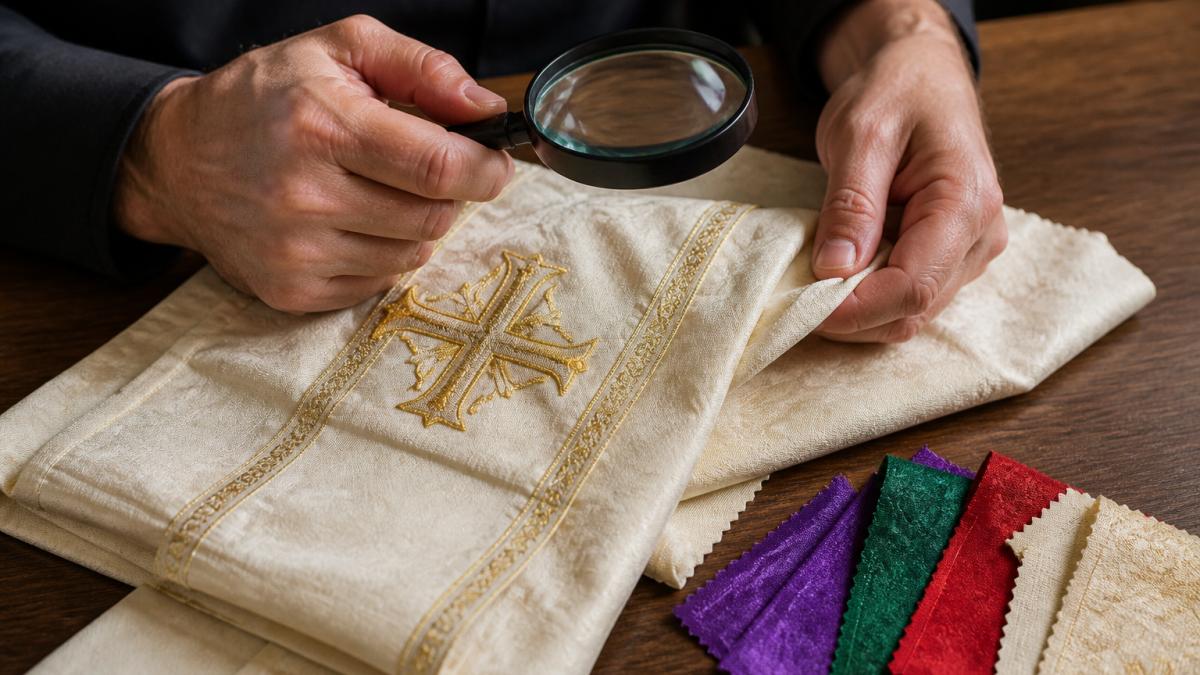
Ask for a Swatch Before You Commit
A fabric swatch costs nothing and settles the question faster than any photo. Compare the swatch against the vestments you already own so the new piece matches in weight and sheen, mismatched sheen is the most common reason a budget purchase looks out of place next to existing vestments.
If you are ordering several pieces at once, request swatches for every fabric you are considering. One mailing saves multiple return shipments.
A common mistake is judging by photos alone. Ask for a fabric swatch when you can. It costs nothing and settles the question fast.
Step 3: Find Affordable Catholic Vestments Without Cutting Quality
Affordable Catholic vestments come from timing and volume, not from hunting for the cheapest listing. The best prices show up when you buy off-season, buy in sets, and buy from a supplier who sells directly rather than through a chain of resellers.
United States Conference of Catholic Bishops guidance on liturgical norms confirms that vestment color and form follow the liturgical calendar, so planning purchases around your parish calendar is a sound way to buy at the right moment.
Where Discounts Actually Come From
Retail markup builds up at every hand a garment passes through. You can browse the garments we offer to compare fabric and finishing before you commit.
Step 4: Build a Church Budget Planning for Liturgical Supplies Framework
Church budget planning for liturgical supplies works best as a rolling three-year cycle, not a single annual line. Vestments, candles, and sanctuary goods wear at different rates. Track each one separately.
Start with a simple sheet:
| Supply Category | Replace Every | Budget Share | Notes |
|---|---|---|---|
| Primary vestment sets | 5-8 years | Largest share | Two colors used most |
| Seasonal vestments | 8-10 years | Medium share | Red, rose, black |
| Altar candles | 1 year | Steady annual | Varies by service count |
| Linens and small goods | 2-3 years | Small share | Easy to overlook |
Review the sheet each year and adjust. You can view our candle selection to price line items, and contact our team about group orders or a tax exemption request.
Group Purchasing and Parish-Level Procurement
Group purchasing can help small congregations. When several parishes order together, buyers can coordinate their needs. Ask neighboring churches what they need this year. Combine the order. This is the angle most buying guides skip, and it matters most for small chapels.
Step 5: Apply Liturgical Vestment Care Tips That Extend Garment Life
Store vestments flat or on wide padded hangers, never on wire. Keep them out of direct sun, which fades dye faster than wear does.
Fold and hang with care:
- Air garments after each use before storing
- Spot clean promptly instead of waiting
- Follow the care label, especially on wool and brocade
Repair and Tailoring Options
A loose hem or a worn cuff is a repair, not a replacement. A local tailor can often fix both for far less than a new vestment. Keep a small repair kit and check seams at the start of each season. Catching a split seam early saves the whole panel.
Step 6: Weigh New, Second-Hand, and Resale Vestments
Second-hand and resale vestments stretch a budget further than most buyers expect, but the real savings come from knowing where used vestments actually change hands, not from generic thrift-store advice. This is the angle most buying guides skip entirely.
Where Used Vestments Actually Come From
- Closing and merging parishes. When congregations consolidate, vestment sets, albs, and server robes are often sold or given away. Ask the diocesan office whether any parishes in the region are consolidating; that is the single most reliable source of well-made pieces at a fraction of new cost.
- Retired clergy and religious communities. Retiring priests and sisters frequently have personal vestments they no longer use. A note to the local clergy association or a religious community often surfaces pieces that never reach a retail listing.
- Parish-to-parish transfers. Many dioceses maintain informal vestment libraries or swap networks. A set in the wrong color or size for one parish is often exactly what a neighboring chapel needs. Ask before you buy new.
How to Inspect a Used Vestment
Used pieces need a closer look than new ones. Check these before you commit:
- Stitching and lining. Look for split seams, especially at the shoulders and hem, and for lining that has separated from the shell.
- Stains and repairs. Ask directly about stains, and inspect under good light. Old wax, incense, and wine stains may not lift.
- Color fading. Compare the front panel to a covered area such as the inside hem. Uneven fading is hard to reverse.
The Trade-Off Against New
Resale gives you value if you are patient and willing to accept limited color and size options. To benchmark cost and quality against a new option, you can view an Altar Server Cassock – Youth Button Front.
A practical pattern is to buy the most-used color (usually white or green) new, so it fits and matches, and to source the rarely used colors (rose, black, red) through parish transfers or resale.
Before buying any vestment new, ask your diocesan office whether a vestment library or parish swap network exists. A single inquiry can save more than any sale.
Buying used isn’t a downgrade. It’s a smart way to fund the pieces you truly need new.
Frequently Asked Questions
What are the most affordable materials for liturgical vestments?
Polyester blends and cotton-polyester mixes usually cost less than pure wool or silk while holding up well to regular use. Look for a fabric weight that drapes without wrinkling and check the fiber content label before buying. Merino wool costs more upfront than synthetic blends. Compare fabric samples and fiber content before committing a parish budget.
How can a parish save money on clergy vestments?
Three moves do most of the work: buy investment pieces that last a decade instead of replacing cheap sets every two years, pool orders with neighboring congregations, and set a fixed line item in your church budget planning for liturgical supplies so purchases happen on schedule rather than in emergencies. Repairing and tailoring existing vestments also stretches dollars further than most parishes expect.
Is it better to buy new or used vestments for church use?
Used vestments from thrift stores, resale listings, and parish swaps can cut costs sharply, especially for seasonal pieces worn a few times a year. Inspect seams, lining, and embroidery for wear before buying, and confirm the size matches your clergy. For the most visible pieces worn every Sunday, new vestments with documented fiber content usually deliver better longevity and resale value.
How do I maintain vestments to extend their lifespan and save costs?
Follow the care label, spot-clean promptly, and store vestments flat or on padded hangers away from direct light. Rotate pieces so no single set takes all the wear, and have small repairs done before tears spread. Following care guidance like this can help vestments stay in good condition for longer.
Sourcing vestments on a tight budget comes down to planning, patience, and knowing where quality holds up. Church Catalog is family owned and has served over 100,000 churches and ministries, offering thoughtfully crafted vestments, candles, and sanctuary supplies with fast shipping. Get started with Church Catalog and equip your worship space with pieces built to last.
