
Last Updated: November 7, 2026
Quick Summary
Affordable liturgical vestments for churches are best bought by planning around need: rank garments by how often they are worn and how visible they are, then fund the core principal colors first. Compare written quotes for identical specifications, and inspect any used piece carefully before buying.
- Sort needs into weekly vestments, feast garments, and occasional pieces before comparing prices.
- Buy green and violet first, since they cover the longest stretches of the liturgical calendar.
- Compare quotes for the same specification, checking fabric, lining, decoration, sizing, and shipping.
- Measure each cleric once, record the numbers, and reuse them to avoid costly fitting errors.
- Buy primary worn pieces new, and consider well-inspected used garments for occasional or backup use.
Table of Contents
- Why Liturgical Vestments Matter Before You Set a Budget
- Catholic Priest Vestments Names and the Liturgical Vestments and Their Meaning
- Vestments by Liturgical Color and Season
- Church Vestments on a Budget: Setting a Realistic Purchasing Plan
- Used Church Vestments: When They Make Sense and What to Inspect
- Ordering Your Next Set of Vestments for the Liturgical Year
- Frequently Asked Questions
Why Liturgical Vestments Matter Before You Set a Budget
Affordable liturgical vestments for churches are easier to buy well when you know what the garments are for. Vestments mark the roles of clergy in worship and carry the color and symbolism of each season (Understanding the Liturgical Colors).
Before comparing prices, sort your needs into three groups: vestments worn every week, garments for feasts and special services, and pieces needed only occasionally. A parish with one priest and a weekly Mass has very different needs from a cathedral with several clergy and a full calendar. Clear categories keep a budget from being spread too thin across items that do not get used.
A common mistake is buying the most ornate set first. Plain, well-made garments in the principal colors often serve a congregation well over the years. Start with the core set and add seasonal pieces as the budget allows.
Catholic Priest Vestments Names and the Liturgical Vestments and Their Meaning
Most parishes encounter the same core garments. Knowing the names helps you write a clear order and compare suppliers accurately. To learn about the handmade liturgical goods behind these garments, read Why Choose Handmade Liturgical Sanctuary Goods.
- Alb: A long white linen garment worn under other vestments. It symbolizes purity and baptism.
- Cassock: A full-length garment, usually black, worn by clergy as everyday dress and beneath other vestments.
- Amice: A small rectangular linen cloth worn around the neck and shoulders.
- Cincture: A cord that ties the alb at the waist.
- Stole: A long strip of fabric worn around the neck, showing the wearer’s ordained role.
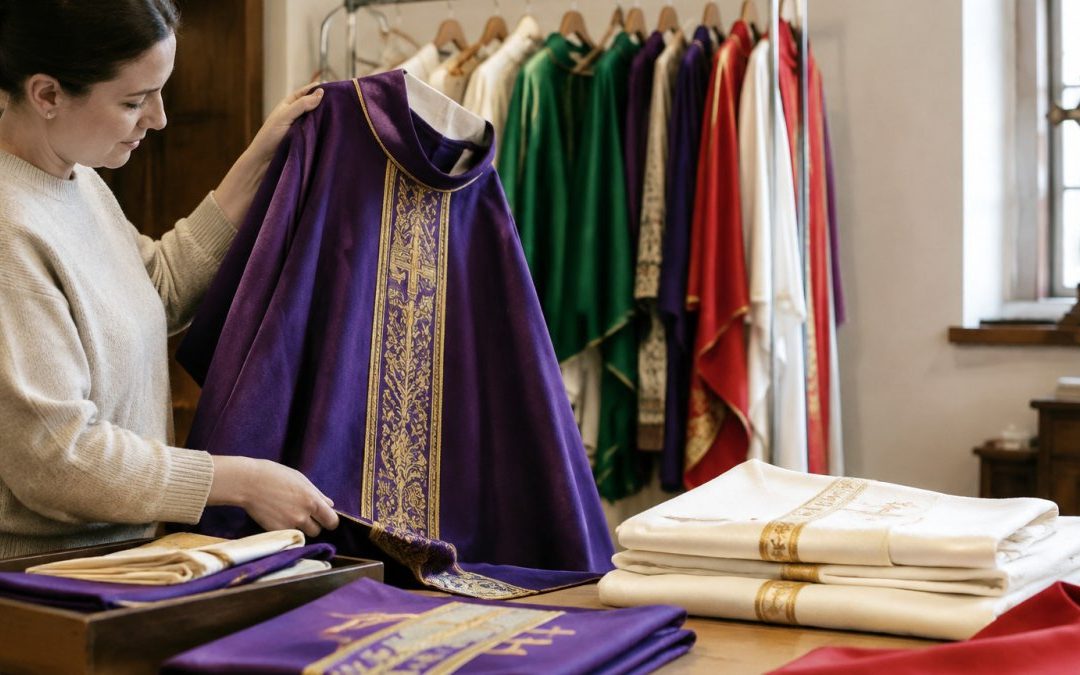
- Chasuble: The outer vestment worn over the alb and stole for Mass, traditionally the most visible garment.
- Dalmatic: A wide-sleeved outer vestment worn by deacons, sometimes by bishops.
- Cope: A long cape-like garment worn for processions, benedictions, and certain feasts.
When you write an order, list each garment by name, size, and quantity. Precise names reduce returns and errors.
Vestments by Liturgical Color and Season
The liturgical calendar assigns colors to seasons and feasts (Liturgical Calendar for the Dioceses of the United States). Many parishes keep a full set in each principal color, but a smaller starting set can cover most of the year.
Common colors and their typical uses:
| Color | Typical Seasons or Feasts | Starting Priority |
|---|---|---|
| White or gold | Christmas, Easter, feasts of saints | High |
| Green | Ordinary Time | High |
| Violet | Advent, Lent | High |
| Red | Pentecost, Passion, martyrs | Medium |
| Rose | Gaudete and Laetare Sundays | Low |
| Black | Funerals (where permitted) | Medium |
Our advice for most parishes is to buy green and violet first, since they cover the longest stretches of the calendar.
Church Vestments on a Budget: Setting a Realistic Purchasing Plan
Affordable liturgical vestments for churches depend on a plan, not only a low price. For a deeper guide to sourcing vestments cheaply, see smart ways to source vestments on a limited budget. To see a concrete priest cassock product and its price range, view the Priest Cassock listing.

Rank every piece on two axes: how often it is worn and how visible it is during worship. A green chasuble worn through most of Ordinary Time earns its cost quickly; a rose set worn twice a year is a low priority until the core colors are covered. Fund high-frequency, high-visibility pieces first and treat occasional garments as later additions.
What actually drives the price of a vestment:
- Fabric: Natural and blended fabrics with a substantial hand generally cost more than lightweight synthetics, and they drape and wear differently. Ask for fiber content and weight, not just a color name.
- Construction: Fully lined garments, reinforced seams, and hand-finished hems add labor. A simple unlined alb costs less up front but may need replacement sooner.
- Decoration: Machine embroidery is typically less expensive than hand embroidery, and metallic threads and applique work add cost. Match decoration to how often the piece will be worn.
- Sizing: Standard sizes cost less than made-to-measure. Custom sizing is worth it for clergy who wear a garment weekly, less so for a backup piece.
- Quantity and sets: Coordinating a chasuble, stole, and dalmatic in the same fabric and trim often costs less per piece than buying separately, and keeps the sanctuary visually consistent.
- Timing: Rush orders and short lead times usually carry a premium. Ordering well before Advent or Lent is one of the simplest ways to protect a budget.
A workable purchasing plan follows five steps:
- Inventory what you already own, including condition, color, and size. Many parishes buy duplicates they already have in a closet.
- Count the clergy who will wear each garment and how often, then multiply by the number of services in the season.
- Separate essential pieces from occasional pieces, and set a target number of complete color sets rather than individual garments.
- Request written quotes for the same list from more than one supplier, itemizing fabric, decoration, sizing, shipping, and any setup or custom charges.
- Hold back a reserve for alterations, cleaning, and repair, because those costs arrive after delivery.
When you compare quotes, compare the same specification. A lower quote may use a lighter fabric, omit lining, or exclude shipping.
Ask suppliers whether they offer a tax exemption for church purchases. Many churches qualify, so check eligibility before you order, and confirm what documentation the supplier needs.
Watch out: ordering without measurements is the costliest mistake. A garment that does not fit may need alteration or replacement, which removes the savings you planned for.
Used Church Vestments: When They Make Sense and What to Inspect
Used vestments can stretch a budget, especially for a parish updating a single garment or building a backup set.
The purchase price is only the beginning.
When you inspect a used vestment, check these points:
- Fabric: Look for thin spots, fading, or stains that will not wash out. Hold the fabric up to light to see wear at stress points such as shoulders and hems.
- Seams and hems: Loose stitching is simple to fix only if the fabric is still strong. Pull gently at seams to test whether the thread or the fabric gives first.
- Embroidery: Check for loose threads or worn gold and silver work. Ask whether the decoration is stitched or glued, since glued ornamentation is harder to repair.
- Lining: A torn or stained lining can be replaced, but that adds cost. Confirm the lining is attached in a way a local tailor can replicate.
- Fit: Measure the garment against your clergy, since alterations can be costly. Compare chest, length, and sleeve measurements rather than labeled sizes.
- Odor and mildew: These are often hard to remove and can damage other pieces. Musty storage is a warning sign for the whole garment.
- Hardware and trim: Check clasps, cords, and trim for missing pieces, because matching vintage trim is difficult.
Before buying, ask for the fiber content, approximate age, and any known repairs. If the seller cannot answer, price the garment as if it needs work.
Be cautious with used pieces that have worn embroidery or fragile fabric, since repairs can cost more than new garments.
Ordering Your Next Set of Vestments for the Liturgical Year
Plan your order before the season that needs it. Shipping times matter, and a rushed order leaves little room for fit checks.
Here is a simple timeline to follow:
- Six to eight weeks before Advent or Lent: Confirm your list and measurements.
- Four weeks before: Request a written quote and confirm the delivery date.
- Two weeks before: Receive and try on garments, and note any alterations needed.
- Before the season begins: Store pieces properly so they are ready for use.
Care extends the life of every garment. Store vestments flat or hung in breathable covers, away from direct light, and launder or dry-clean according to the fabric label.
For a parish building its vestment collection with care and a realistic budget, reach out to Church Catalog for current pricing and a quote.
Frequently Asked Questions
How much do vestments cost?
Vestment pricing depends on the garment type, fabric, embroidery, quantity, and delivery timing, so there is no single figure that applies to every parish. For current prices and a quote tailored to your parish, check the Church Catalog website or request a quote directly. Comparing the fabric weight, stitching, and lining of similar items from several providers will show you what you are paying for.
How much do priest vestments cost?
Priest vestments vary widely based on whether you are buying a basic set or a full set with stoles, chasubles for each liturgical color, and matching accessories. A complete set for one priest costs more than a single garment, so plan by the number of colors and seasons you need to cover. Ask any supplier for itemized pricing so you can see which pieces drive the total. Church Catalog provides current pricing and quotes on its website.
What are the five liturgical vestments?
The five principal vestments worn by a Catholic priest at Mass are the amice, alb, cincture, stole, and chasuble. The amice is a linen rectangle worn at the neck, the alb is a full white linen garment reaching the ankles, and the cincture is a cord that secures the alb at the waist. The stole is worn around the neck and the chasuble is the outer garment. Knowing these five pieces helps you order a complete, functional set without duplicating items.
Are used church vestments a good option?
Used vestments can be a sound choice for a budget-conscious parish if the fabric is intact, the embroidery is secure, and the garment still fits the celebrant. Inspect seams, collars, and linings for wear, and check that the liturgical color matches what you need. Avoid pieces with fraying, staining that does not wash out, or weakened stitching around stress points. A used garment that passes these checks can serve for years, though a new set may still be preferable for matching colors across a full season.
